|
FlyingFish |
|
|
|
|
|
|
This website is dedicated to the resistance against news and image management, against the systematic distortion and trivialisation of reality which mainstream culture spews forth. Information is power. Control of and access to the mass media is power. Most of us have virtually none of these; most of us are virtually powerless. To the extent that we know and understand what's going on around us, we are empowered to make informed and wise decisions about how we live and act. Most of us know or understand next to nothing about the world around us; therefore, our 'freedom of choice' and our votes are next to worthless. It is against the interests of politicians and business that we be empowered. The less we are aware, the more they are able to sell us their images, news, ideas and products. None of these necessarily improve the quality of our lives; indeed, they impoverish our lives, since a quality life is an empowered life, and this is precisely what politicians and business strive to grasp for themselves.
|
|
|
'The problem is not propaganda but the relentless control of the kind of things we think about ' |
|
|
|
| Manifest Destiny! The true purpose of torture 'Guantánamo is there to terrorise - both inmates and the wider world' |
| Gustave Gilbert, a German-speaking
intelligence officer and psychologist, in conversation with Hermann
Goering in his cell on the evening of 18 April 1946: |
|
| We got around to the subject of
war again
and I said that, contrary to his attitude, I did not think that the
common
people are very thankful for leaders who bring them war and
destruction. "Why, of course, the people don't want war," Goering shrugged. "Why would some poor slob on a farm want to risk his life in a war when the best that he can get out of it is to come back to his farm in one piece. Naturally, the common people don't want war; neither in Russia nor in England nor in America, nor for that matter in Germany. That is understood. But, after all, it is the leaders of the country who determine the policy and it is always a simple matter to drag the people along, whether it is a democracy or a fascist dictatorship or a Parliament or a Communist dictatorship." "There is one difference," I pointed out. "In a democracy the people have some say in the matter through their elected representatives, and in the United States only Congress can declare wars." "Oh, that is all well and good, but, voice or no voice, the people can always be brought to the bidding of the leaders. That is easy. All you have to do is tell them they are being attacked and denounce the pacifists for lack of patriotism and exposing the country to danger. It works the same way in any country." Gustave M. Gilbert, Nuremberg Diary, New York: Farrar, Straus and Co, 1947, pp. 278-9. |
|
|
|
|
| Posters from The Propaganda Remix Project |
||
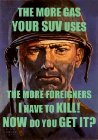
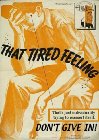
| What Kurt
Vonnegut says about the posters: These anti-war posters by Micah Ian Wright are reminiscent in spirit of works by artists such as Käthe Kollwitz and George Grosz during the 1920s, when it was becoming ever more evident that the infant German democracy was about to be murdered by psycho-pathic personalities, hereinafter 'PPs', a medical term for smart, personable people who have no conscience. PPs are fully aware of how much suffering their actions will inflict on others, but they do not care. They cannot care. The classic medical text about such attractive leaders turning into unspeakable calamities is The Mask of Sanity, by Dr Hervey Cleckley. An American PP at the head of a corporation, for example, could enrich himself by ruining his employees and investors, and still feel as pure as the driven snow. A PP, should he somehow attain a post near the top of our federal government, might feel that taking the country into an endless war, with casualties in the millions, was simply something decisive to do today. And so to bed. With a PP, decisiveness is all. Or, to put it another way: we now have our own Reichstag fire to do something about. What will it be? Trading on Fear, The Guardian, Weekend magazine, 12 July 2003, p.33. |
||